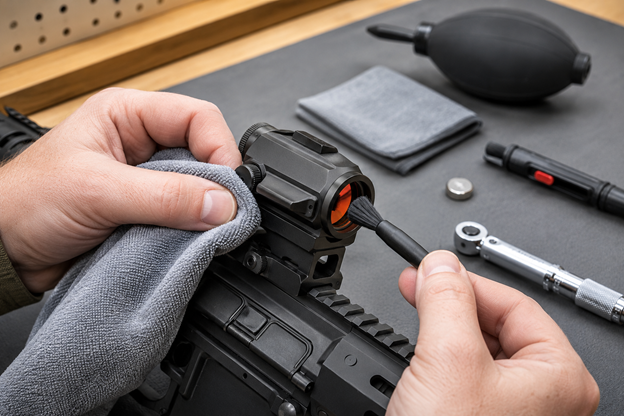
Red dot sights are valued because they make aiming faster and more intuitive than traditional iron sights. Instead of aligning a front post and rear notch, the shooter places an illuminated dot on the target and focuses on a clean sight picture. For close-range and fast-moving situations, that simplicity can make a noticeable difference.
Once you start comparing red dot sights, one design choice appears quickly: open emitter or enclosed emitter. Both types can be accurate, practical, and suitable for serious use. The difference is not that one design is automatically right for every shooter. The better choice depends on where you shoot, how you carry the firearm, and how much exposure your optic is likely to face.
What Makes an Open Red Dot Sight Different?
An open red dot sight has an exposed emitter. The small light source projects the dot onto the lens, but the emitter area is not fully sealed inside a closed housing. This gives the sight a compact shape and often keeps weight low, which is one reason open designs are common on pistols and lightweight rifles.
Many shooters like the open design because it feels minimal. There is usually less housing around the window, so the sight can feel less visually restrictive when shooting with both eyes open. For range use, competition, recreational shooting, and fair-weather outdoor practice, this can be a very comfortable setup.
The main drawback is exposure. Dust, mud, rain, snow, or even clothing lint can block or distort the projected dot if it gets into the emitter area. This does not mean an open sight is unreliable in normal use. It does mean the shooter should inspect the optic before shooting and keep the emitter area clean.
Where Enclosed Red Dot Sights Stand Out
An enclosed red dot sight places the emitter inside a sealed body. Instead of having one exposed projection area, the optic has a more protected structure with lenses at the front and rear. This design helps keep debris and moisture away from the emitter, which is one of the most sensitive parts of the sight system.
That protection matters in rougher conditions. Hunters may move through wet brush, cold mornings, dust, or rain. A firearm used for duty, field work, or daily carry may be exposed to sweat, lint, dirt, and sudden weather changes. In those situations, an enclosed design gives the shooter one less thing to worry about.
The tradeoff is size. Enclosed sights are often slightly bulkier and heavier than open models. On a rifle or shotgun, this may not be a major issue. On a compact handgun, the extra housing can feel more noticeable. Some shooters also find that enclosed sights feel more tube-like at first, although practice usually reduces that concern.
Open vs Enclosed Red Dot Sights at a Glance
| Factor | Open Red Dot Sight | Enclosed Red Dot Sight |
|---|---|---|
| Emitter protection | Emitter is exposed to dust, water, lint, and debris | Emitter is sealed inside the optic body |
| Weight and size | Usually lighter and more compact | Usually slightly heavier and bulkier |
| Common use | Range shooting, competition, lightweight setups | Hunting, field use, duty use, daily carry |
| Maintenance focus | Lens and emitter area must both be checked | Exterior lenses and housing should be kept clean |
Choosing Based on Your Shooting Environment
If most of your shooting happens at a controlled range, an open red dot sight may be more than enough. The environment is usually cleaner, the firearm is often transported in a case, and the shooter has time to inspect the optic before firing. In that setting, the lighter and simpler design is a practical advantage.
Competition shooters may also prefer open designs because speed, weight, and sight window feel can matter during timed stages. If the shooter is already disciplined about checking equipment before a match, the exposed emitter is usually manageable. The key is not ignoring maintenance.
For outdoor shooting in unpredictable conditions, an enclosed sight becomes more attractive. Rain, dust, snow, mud, and vegetation can all interfere with exposed components. A sealed emitter does not make the optic immune to every problem, but it reduces the chance that a small obstruction will interrupt the dot when the sight is needed.
Firearm Type Also Matters
On rifles and carbines, the difference in size between open and enclosed red dots is often less important. A slightly larger optic may not affect handling much, especially if the firearm is already set up for field use. In this case, many shooters may choose based on durability, battery access, mount height, and weather resistance.
On handguns, the decision can be more personal. Open red dots keep the slide-mounted setup lighter and lower profile. That can help preserve the balance and carry comfort of the pistol. For shooters who mainly use a pistol at the range, this may be the most sensible option.
For daily carry, enclosed pistol optics deserve serious consideration. A carried handgun is often exposed to sweat, lint, clothing fibers, and temperature changes. Because an enclosed sight protects the emitter, it can be easier to keep functional during long periods of carry. The shooter still needs to clean the glass, but the projection system is better shielded.
Durability Is Not Only About Open or Enclosed Design
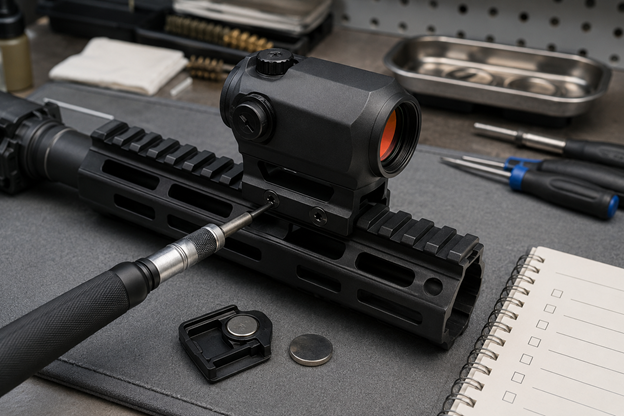
It is easy to assume that every enclosed sight is tougher than every open sight. That is too simple. Overall quality depends on the housing material, lens coatings, waterproofing, shock resistance, adjustment system, battery compartment, and mount. A well-built open sight can be more dependable than a poorly built enclosed one.
Mounting compatibility is especially important. A red dot sight must fit the firearm, rail, slide cut, or adapter plate correctly. If the mount is weak or the screws are not secured properly, even a high-quality optic can lose zero. Shooters should check fitment before buying and recheck zero after installation.
Battery access is another practical detail. Some optics require removal from the firearm to replace the battery, while others allow battery changes from the side or top. If removing the optic is required, the shooter may need to confirm zero again afterward. This is not always a problem, but it affects convenience over time.
Maintenance and Training Still Decide Performance
No red dot sight removes the need for care. Open sights should be checked for anything blocking the emitter. Enclosed sights should be checked for dirty lenses, loose mounts, damaged housings, and battery condition. A lens pen, soft brush, and microfiber cloth are better choices than rough fabric or improvised cleaning methods.
Training matters just as much as equipment. A red dot can help with faster target acquisition, but the shooter still needs safe handling, stable grip, trigger control, and consistent presentation. Handgun shooters often need time to learn how to find the dot quickly after drawing or mounting the pistol.
The sight is a tool, not a substitute for skill. Whether the design is open or enclosed, the shooter should practice in the conditions where the firearm will actually be used. A range-only setup and a field-use setup may need different priorities.
Final Decision
An open red dot sight is a strong choice for shooters who want a lighter, more compact optic for range work, competition, or controlled conditions. It gives fast aiming support without adding much bulk, as long as the shooter is willing to keep the emitter clean and inspect the sight regularly.
An enclosed red dot sight is better suited to shooters who expect rain, dust, brush, daily carry, or rougher field use. The sealed emitter adds protection and can improve confidence when conditions are less predictable. The tradeoff is usually a little more size and weight.
The right choice comes down to use, not trends. If your priority is minimum bulk and clean range performance, open makes sense. If your optic may face weather, dirt, or constant carry, enclosed is usually the more practical design.